Summary
While spells inBaldur’s Gate 3gameplay go all the way up to 6th-Level, their sheer firepower may feel a bit overkill when used haphazardly in theD&Dadaptation. However, measly Cantrips and 1st-level spells do seem tame in comparison to the effects of the most powerfulBaldur’s Gate 3spells. Spellcasters looking for a decent middle ground may want to considerLevel 4spells, which are at a rank close to 6th-Level spells but have reasonable effects for their cost.
When cast, most 4th-level spells can create effects that don’t necessarily break combat but instead give players a more specific edge. They don’t immediately deal wanton devastation on the battlefield, but instead facilitate strategies that secure the advantage for players, especially in challenging fights that demand more tactical prowess.

(Updated on June 22, 2025 by Rhenn Taguiam):With the upcoming update of Baldur’s Gate 3 about to introduce entirely new subclasses to all of the game’s 12 main Classes, fans of the acclaimed Larian Studios RPG will finally have entirely new ways of approaching their gameplay. And while it’s easy to get lost in all of the potential Multiclass options, fans using Spellcasters may even simply experience changes in their playstyles as soon as they access their character’s stronger Spell Slots - a dynamic that 4th-Level Spells already introduce in the game. Players who want to study their Spellcasters down to the last detail may want to give the game a couple more playthroughs, especially in anticipation for the update. With this in mind, players may want to try out some new variations of 4th-Level Spells, including a dangerous staggering attack.
Action (for attack), Bonus Action (on hit)

Saving Throw
WIS Save
Smites are oftenassociated with Paladins, but Warlocks can actually access their own versions of Smites through theStaggering Smite- specifically through the Hexblade archetype. As with a traditional Smite, Hexblades who score a hit can now use a Bonus Action and a 4th-Level Spell Slot to deal not just their normal weapon damage but also +4d6 Psychic Damage.
Not only that, but enemies are forced to make a WIS Save or suffer a Disadvantage on all Attack Rolls and Ability Checks (and not be able to take Reactions) for one turn. When used properly, a Warlock can punish opponents for getting close to the party by ensuring they aren’t able to Attack properly and even perform rebuttals with Attacks of Opportunity.

How To Use Staggering Smite
Although the traditional Smite from a Paladin can dish out Radiant Damage to work against most undead, this Psychic Damage and “stagger” effect can help Warlocks set up enemies and even bosses for devastating combos. It’s unadvisable for Staggering Smite to be used for higher Spell Slot Levels, as there are no additional benefits when used this way.
3m

-
Animate Dead is one of the earliest Spells a Spellcaster can learn as they venture deep into the dark arts. And while its 3rd-Level base variant only allows players to use one corpse to summon a Skeleton or a Zombie, upcasting this to fourth-level can have players useAnimate Dead: Skeleton Squadinstead.

As the name suggests, this allows players touse three corpses simultaneouslyto raise a Skeleton crew to fight with them. Although they have a rather so-so 11 AC and 19 HP, their access to an ordinary Ranged Attack can make them an interesting accompaniment to a Spellcaster who wants to maximize their damage output at a distance, as cannon fodder for bosses, or even free damage sources to kill easy pickings among enemy groups. Their access to a rather basic attack with no other benefits make the Skeleton Squad a rather “basic” Spell to cast at 4th-Level unless players really want extra allies.
As long as players have a number of usable corpses available, the 3-unit Skeleton Squad can be excellent sources of consistent long-ranged damage - especially when enemies are forced to focus on them to eliminate them in play. Even if enemies attempt to attack characters who are up close, the Skeleton Squad will ensure they can whittle the Hit Points of opponents - both bosses and minions - regardless of what’s happening.
Similar to Skeleton Squad, theAnimate Dead: Zombie Battalionversion of 4th-Level’s Animate Dead upcast allows players to use three corpses to summon a group of three Zombies. While they seem to just be the “melee version of the Skeleton archers” at first glance, these Zombies actually pack quite the punch in terms of unique effects and abilities. The most important of their base kit would be Undead Fortitude, which essentially allows the Zombie to constantly come back to life at 1 Hit Point unless the Killing Blow dealt to them was a Critical Hit or Radiant Damage.
In seeming celebration to their status as the living dead, Zombies have access to Slam that hits a target with their fists and infects them with the Crawling Gnaw. This condition stays with the victim unless removed. If they die with this condition, they become a Newborn Zombie with 10 Hit Points and take 1 Necrotic Damage per turn.
As long as players have the right number of corpses with them, they can create a 3-unit Zombie Battalion to wreak havoc in melee combat. Not only that, but their capability of using Crawling Gnaw to take Necrotic Damage and even transform enemies into Newborn Zombies can ensure foes are always at a disadvantage. The Zombie Battalion can be the perfect distraction when overwhelmed by foes, while at the same time perfect for giving the rest of the team room to outmaneuver enemies.
4m
CHA Save (DC 14)
When players acquirethe Dark Justiciar Gauntlets in theirBaldur’s Gate 3gameplay, they also gain access toBeckoning Darkness. This 4th-Level Spell is representative of a Dark Justiciar’s worship of Shar, whose grip towards darkness allows the wielder to use the very shadows as their allies.
Upon casting, Beckoning Darkness will curse its target for two turns that forces the very shadows in darkness to fight them. If the target starts their turn or enters a Lightly or Heavily Obscured area, they are instantly dealt with 2d8 Necrotic Damage. Unlike other Spells granted by items, Beckoning Darkness can be cast once per turn with the Gauntlets, essentially allowing players to make darkness stalk their prey until their demise.
How To Use Beckoning Darkness
Beckoning Darkness can be quite an awesome ability to use in broad daylight or places with decent lighting, as it forces enemies to move to obscured areas first instead of attacking other allies. The 2d8 Necrotic Damage per turn for two turns is quite a decent source of extra damage, especially for an item-granted Spell.
It’s a common trope inDungeons & Dragonslore that rare artifacts like staves have “hidden” Spells inside of them - andBaldur’s Gate 3gameplay follows this trend with the Markoheshkir. Accessing this Quarterstaff grants its user with the ability to castKereska’s Favour- essentially a Spell that lets players tap into two (2) Spells of an elemental variant that they can cast once per Short Rest at no extra cost alongside boosting the damage of their chosen elemental type.
As befitting a Spell inside a Quarterstaff of Legendary status, Kereska’s Favour is among the best Spells that can grant players a significant boost in their arsenal. Kereska’s Favour grants access to one of these effects:
How To Use Kereska’s Favour
Despite being one of the most versatile Spells in the game, Kereska’s Favour is only usable once per Short Rest. Given how Kereska’s Favour gives players access to one elemental affinity with two Spells (and an additional effect), they need to check which elements work based on the environment they’re working with. Some specific tips include:
9m
STR Save
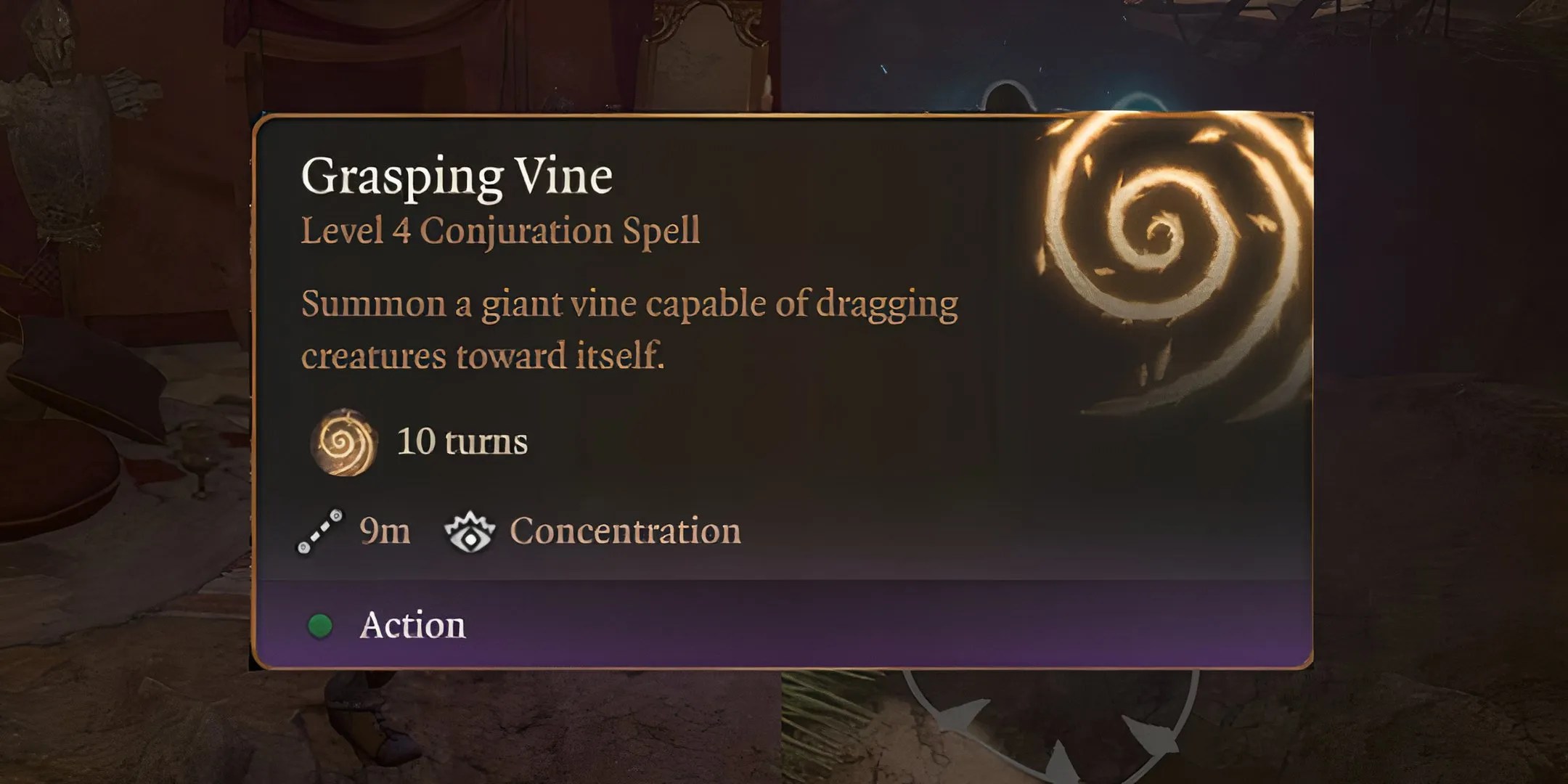
A common trope surrounding plant-based magicians is the capability of commanding vines to restrain enemies, and this is something fulfilled byGrasping Vine. This 4th-Level Conjuration Spell is a Bonus Action that allows players to summon a Grasping Vine within a 9-meter radius, creating a difficult terrain.
What makes Grasping Vine rather interesting is its effect, as anyone stepping on them not only halves their Movement Speed but also has a chance of being Entangled via the Twisting Vines effect. The effect can last up to 10 Turns unless they pull off a DC 12 STR Save, with Attack Rolls against the creature having Advantage and their own Attacks and Saves having Disadvantage.
How To Use Grasping Vine
The biggest changes to Grasping Vine that transition it to a more viable Spell are two things: it no longer costs an Action to use, and it no longer is a Concentration Spell. This finally removes Druids from being the Class that suffers from having a lot of Concentration-heavy Spells, as Grasping Vine provides them with a means of controlling the battlefield that they shouldn’t worry about every turn.
CON
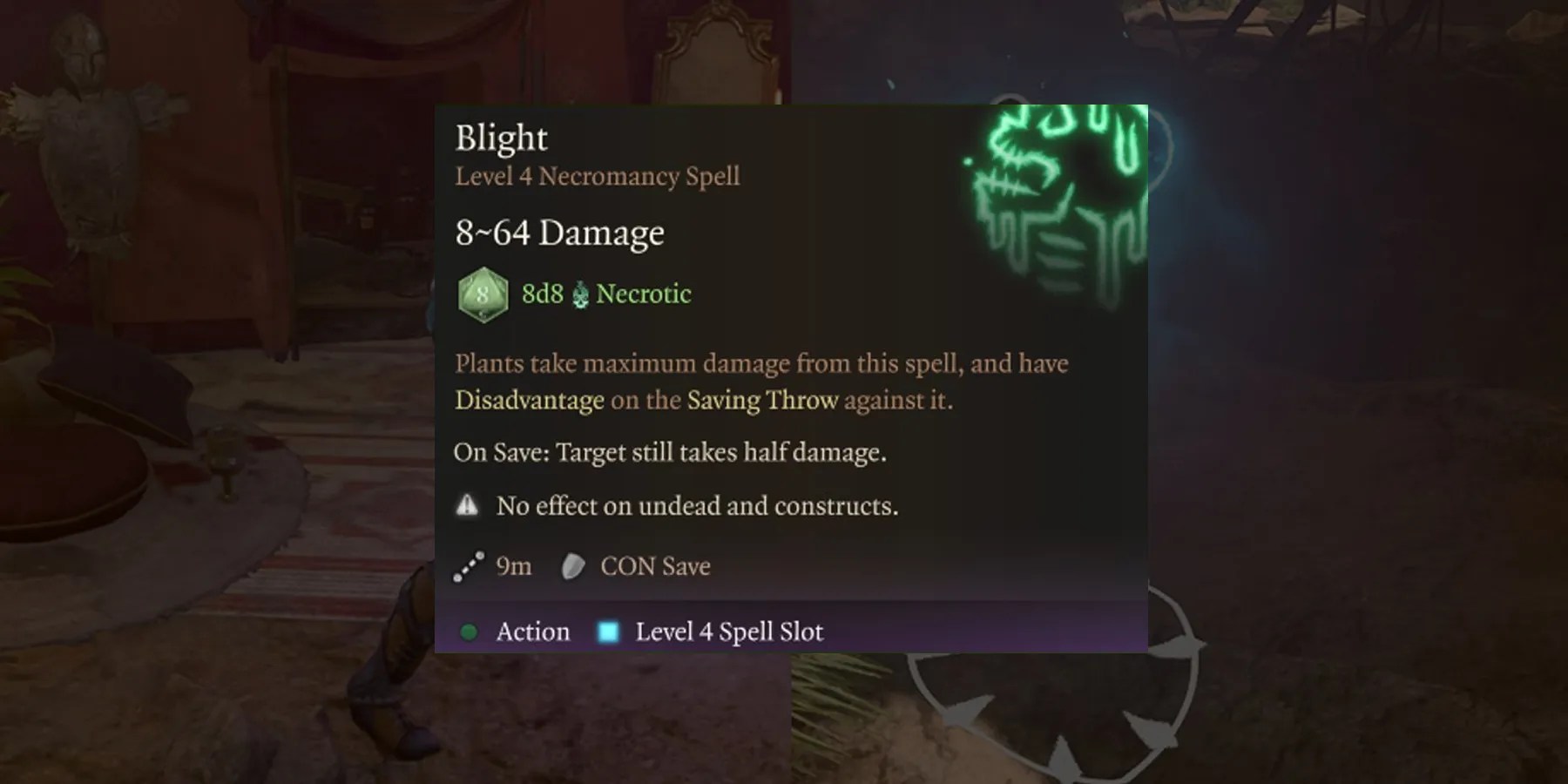
At first glance,Blightseems like a particularly specific 4th-Level Spell given its maximum damage against plants and plant life. Such is the anti-plant nature of this Spell that targeting plants imposes Disadvantage on its CON Save, while not having any effects against Undead and Constructs. This oddly specific nature of the Spell might imply that it’s situational, but this isn’t necessarily the case.
At its core, Blight can deal as much as 8d8 Necrotic Damage to those who fail its CON Save inBaldur’s Gate 3gameplay, and half as much damage to those who succeed. This is still up to 4d8 Necrotic Damage to most targets who can win its CON Save, which might still be enough to eliminate minions and sub-bosses when timed correctly.
How To Use Blight
Considering its effects against Plant-based creatures, Blight isn’t an immediate priority in a player’s repertoire of Spells unless they encounter the said archetype. This makes Blight extremely helpful against the likes of Auntie Ethel in Act 3 or even some parts of the Dark Urge run where certain enemies whip out Wood Toads.
None
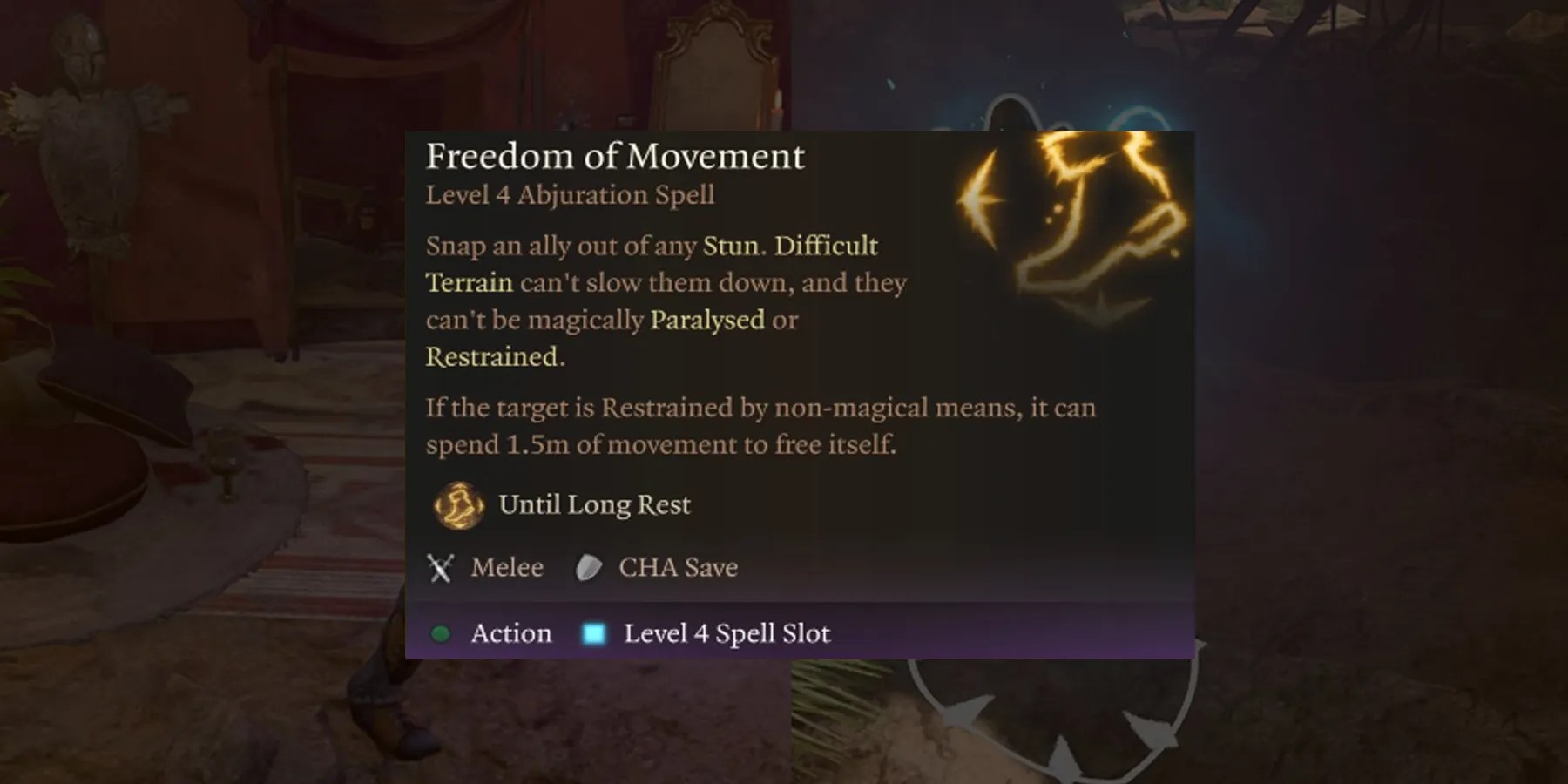
In perilous situations, even a Spell likeFreedom of Movementthat forces an ally to move can be integral to the party’s overall survival. When activated, a target ally immediately snaps out of crowd control effects. This is a particular deterrent against Stun effects, effective resistances against Restrained and Paralyzed effects, and even disables the hindrances of Difficult Terrain.
When used on an ally under the effect of non-magical restraint, the ally can even get 1.5m worth of free movement solely to free themselves. Despite the mundane nature of this Spell, Freedom of Movement is a guarantee that an ally can move within their limits without any hindrances - something useful when push comes to shove.
How To Use Freedom Of Movement
Despite seemingly situational, Freedom of Movement is vital in later parts of the game where there’s always the chance of Spellcasters being a part of an enemy roster or in situations where locations have traps. Should the player’s team rely on creating difficult terrain to debilitate enemy forces, Freedom of Movement is convenient for bypassing the chance of that terrain affecting the team. This makes Freedom of Movement among the best first-to-cast in Camp after every Long Rest, especially since the way it bypasses terrain can give characters a more convenient way of moving the environment.
18m
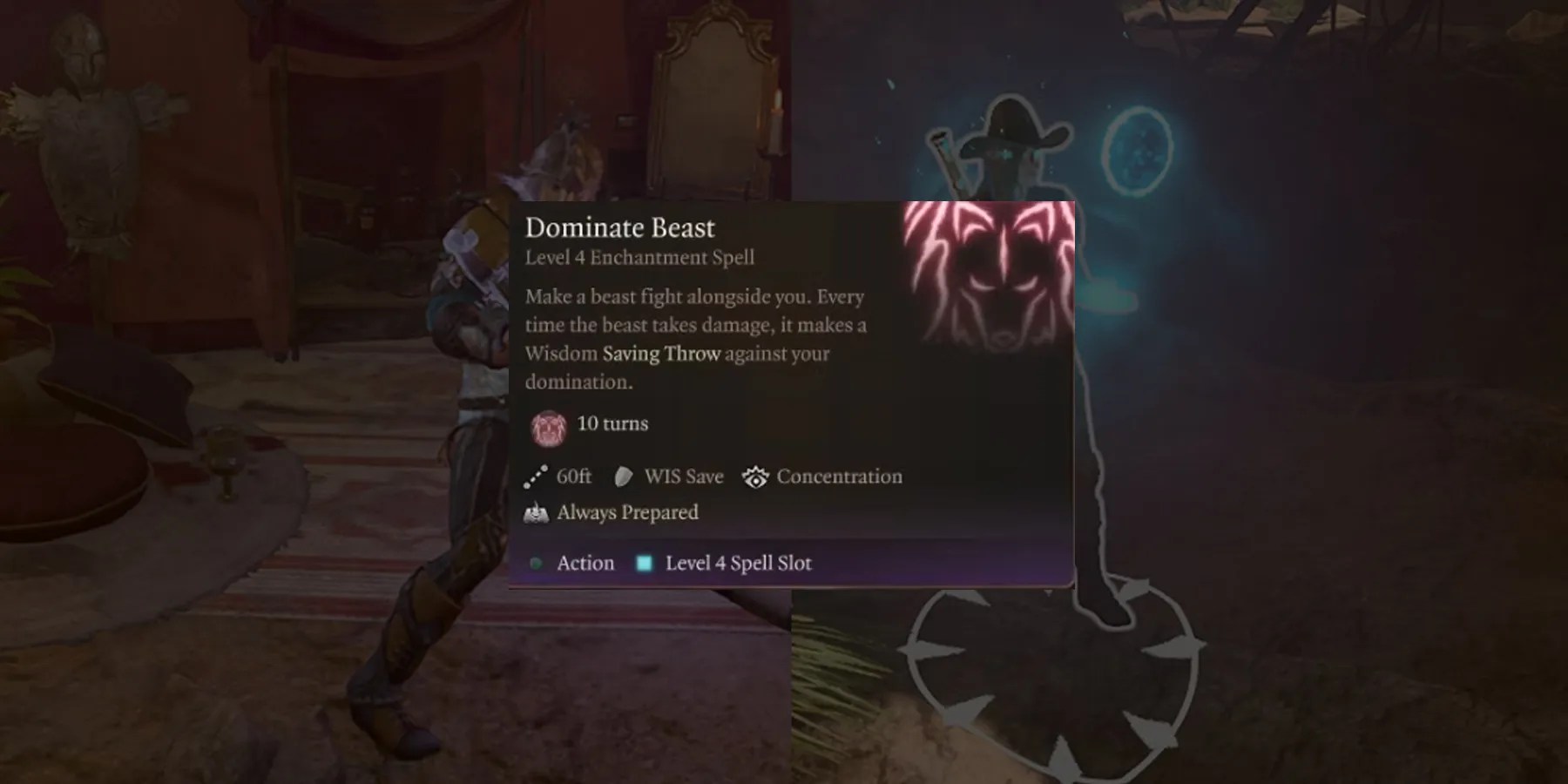
Considering howBaldur’s Gate 3combatoften pits players against an overwhelming number of opponents,Dominate Beastcan turn the tide when a beast is within the enemy ranks. With this Spell, a Spellcaster can force a beast to fight on the player’s behalf. It’s only when the beast takes damage that it makes a Wisdom Save against the player’s control.
While the Wisdom Save adds an element of risk for the beast, especially when they’re positioned close to allies, debuffs could ensure they consistently fail their Saves. The commonality of beasts throughout the game world can also incentivize using Dominate Beast more strategically, as beasts often have lower WIS scores compared to humanoids.
How To Use Dominate Beast
While Dominate Beast isn’t as good as typical Hold Spells due to their need for Concentration and higher Spell Slot cost, Spellcasters who manage to increase their Spellcasting Modifier and even have party members impose Disadvantage on their target can secure their allegiance using Dominate Beast more efficiently. Players also don’t need to Dominate the strongest beast among the enemies, but rather just a target they can control effectively. The game’s AI makes it a point to target Dominated creatures first before the players.
DEX Save
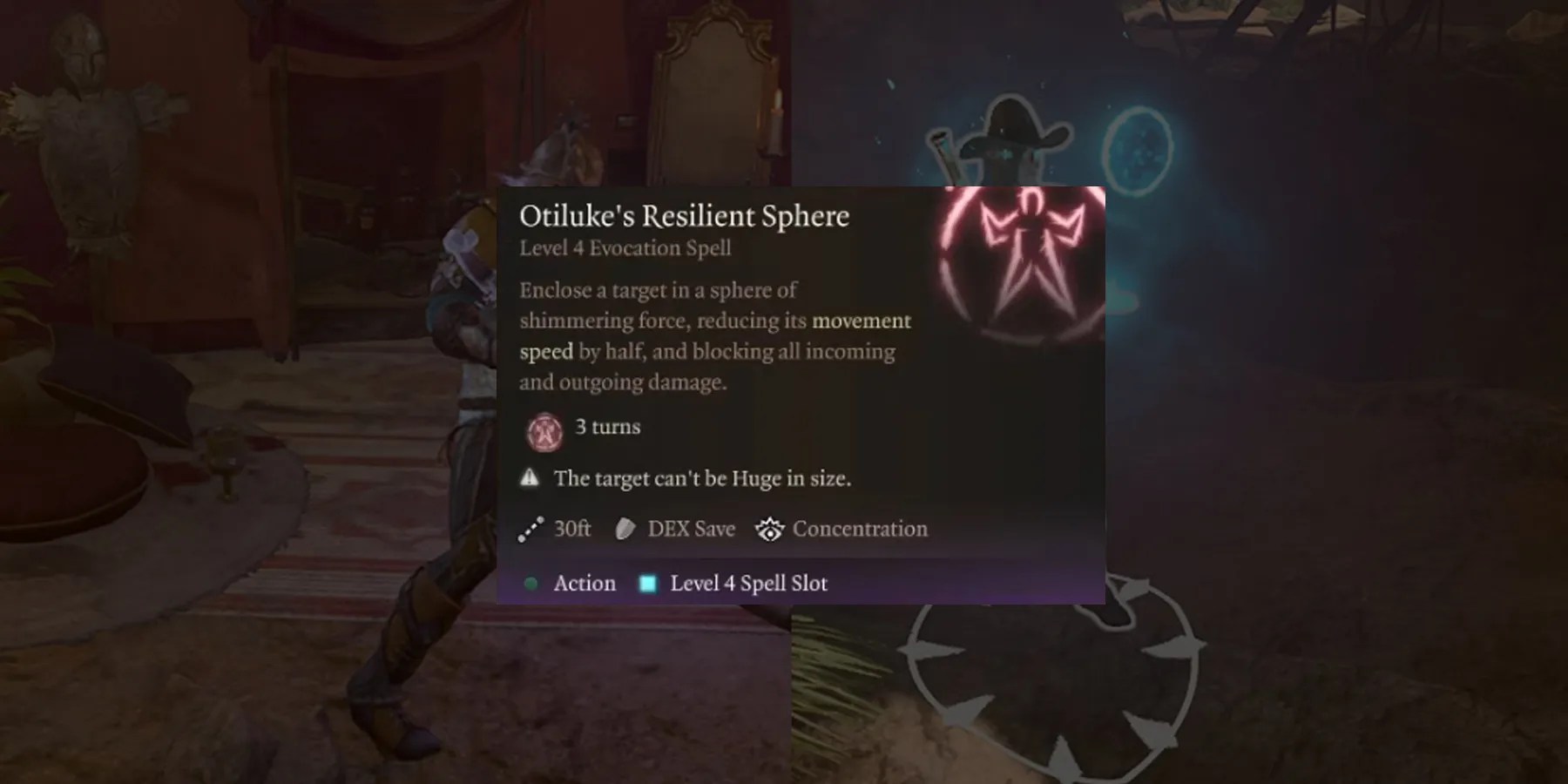
Sometimes, a player may simply need a Spell to cast to stop someone from either taking or dishing out damage. This is whereOtiluke’s Resilient Spherecomes in, a 4th-Level Evocation Spell designed to slow down a target by halving their speed in half and stopping all damage from going to them or getting out of them.
This shimmering sphere essentially becomes an emergency save for allies or a debilitating effect on powerful enemies. The 3-turn timer for the Resilient Sphere could be enough for allies to recover and prepare their counterattack, especially if a boss is inside the Sphere. An ally inside it could also use this time to recover or even partially retreat.
How To Use Otiluke’s Resilient Sphere
Compared to Sanctuary, Otiluke’s Resilient Sphere is a more flexible Spell in situations where delays are especially necessary. Players can stop foes from damaging the party or escaping, protecting characters in need of heals, blocking entrances and hallways, or even tanking possible trap locations.
